



DAVAO CITY – Davao City has yet to finalize the site and funding for its planned centralized data center, with the proposed 100-square-meter facility expected to cost around P50 million to P60 million.
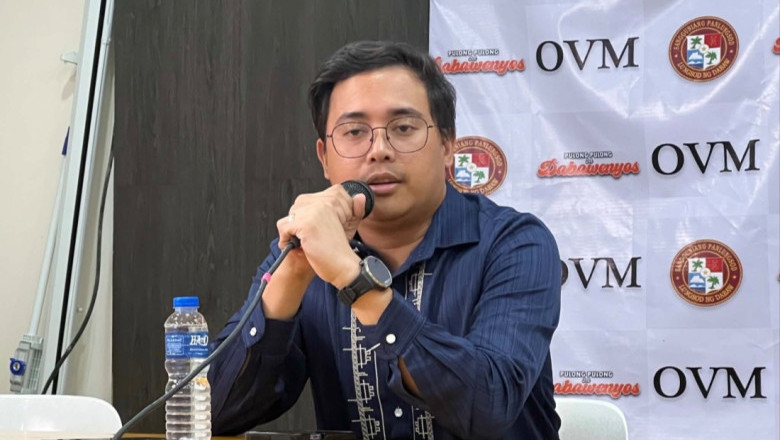
Speaking at the Pulong-Pulong sa Dabawenyos media forum on Tuesday, Sept. 8, Councilor Bonz Andre Militar, chairperson of the Committee on Information Technology, said three areas are considered for the facility.
Militar, however, refused to disclose the locations. He said the site must be secure, away from unauthorized access, and preferably in an area less vulnerable to disasters.
"The physical facility is expected to be budgeted for next year once a location is identified," Militar said. "While construction is still being planned, the city will begin implementing cybersecurity measures."
He said the Davao City Cybercrime Emergency Response Team will start securing the systems as soon as possible, Militar said. Demographics
Militar also clarified that existing city government servers will continue to operate and will not be transferred to the centralized data center immediately.
"Some agencies may no longer need to transfer their servers to the data center physically, but we will still place backup systems there for their servers," Militar said.
The Davao City Council approved an ordinance on Sept. 1 establishing the Davao City Government Centralized Data Center to strengthen cybersecurity, protect government data, and ensure the continuity of digital services.
Under the ordinance, the City Information Technology Center will lead the planning, development, operation, and management of the facility.
The data center will serve as a centralized platform for hosting and managing government ICT systems, databases, and digital services, while allowing existing systems to continue operating.
Militar said the proposed facility should ideally be located near the City Information Technology Center to facilitate cybersecurity measures.
The project will also consider disaster resilience, with the facility expected to maintain government operations during floods, earthquakes, tsunamis, and other calamities.
The proposed data center is designed to meet Tier 3 standards, which emphasize system availability, redundancy, continuous operations, disaster resilience, and cybersecurity.
The ordinance also requires cybersecurity and data governance policies, regular security audits and vulnerability assessments, and procedures for responding to data breaches and cyberattacks.
Militar said the project budget will include cybersecurity measures and that personnel handling the data center will undergo cybersecurity training.
He said the city already has penetration testers who help identify system vulnerabilities and prevent data breaches.
Militar also said the city's planned data center differs from facilities designed for artificial intelligence, which require more powerful computing equipment and cooling systems.
The city's facility will house standard server cabinets for government agencies and use precision air-conditioning to maintain the required temperature, he said.
 Councilor Bonz Andre Militar













Facebook Conversations